Why Maintenance Matters: A Costly Lesson from a Travel Trailer
A 15-year-old RV trailer and a moment of desperation during Covid taught me an expensive, unforgettable lesson about maintenance.
Buying Trouble During Covid
During the depths of Covid, my wife and I bought a 15-year-old travel trailer. It started a trend of frequent camping for us, including to neighboring states. Looking back, buying a teenage trailer should have been my first warning. The seller was a slick talker, full of stories about how well maintained it was and how little it had been used. Out of desperation, we went for it, paying too much when there were few trailers for sale to choose from.
From there, I was constantly fixing something. By 2023, every trip ended with a new item or two on the to-do list. That pushed down more routine maintenance so I could fix immediate needs, like broken lights or a bad trailer wiring connector. One of those deferred tasks was to inspect and repack the bearings.
I saved a couple hours and $5 in supplies — it cost me $2,600 and could have cost lives.
The Trip to Idaho
We made our second annual trip to North Idaho in 2023. The way the calendar fell, we came home on my son’s third birthday. Not optimal, but it was what I could do. We had a fantastic trip—until the drive home.
About two hours in, we were alerted to a missing window in our trailer. My son must have played with the latch while camping and I forgot to check it. Lesson learned: always have a pre- and post-trip checklist to cover the basics.
Then, later that hot Friday afternoon, the wheel came off.
When the Wheel Came Off
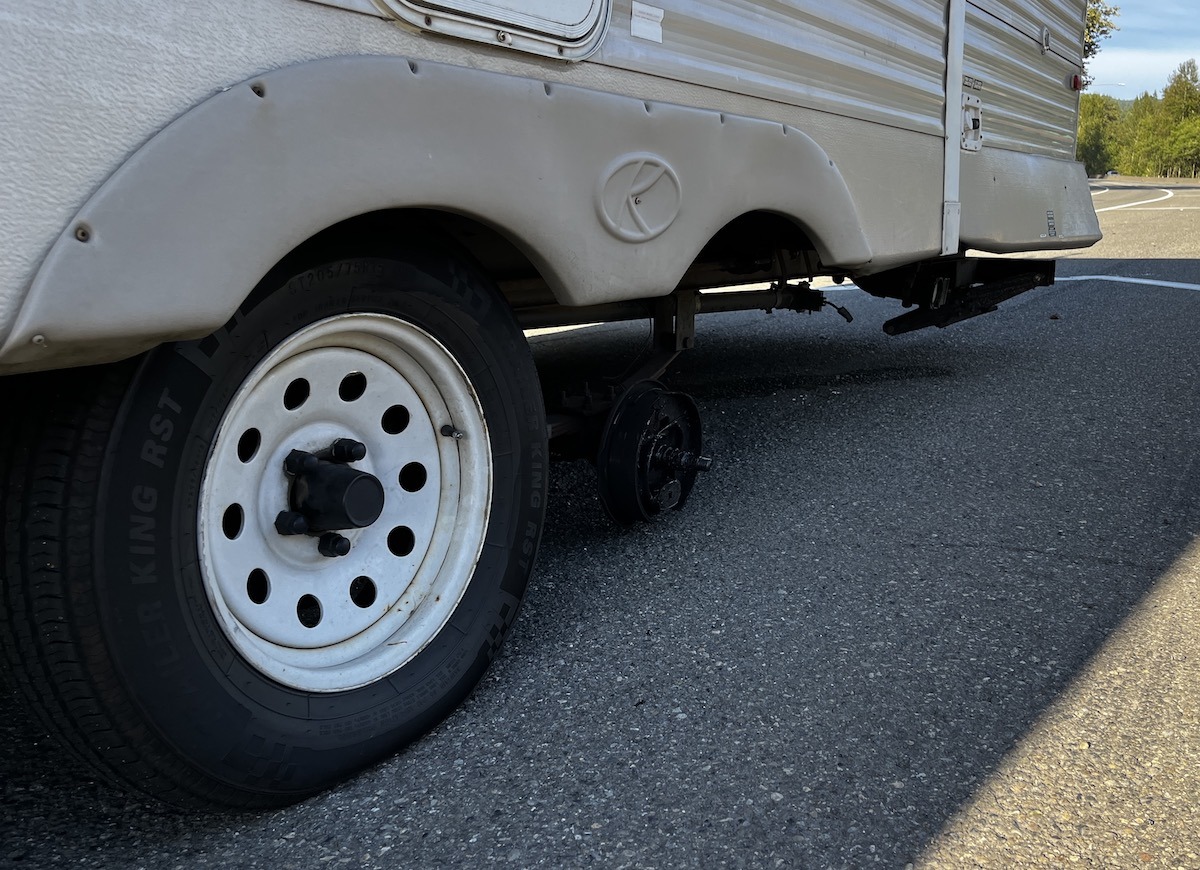
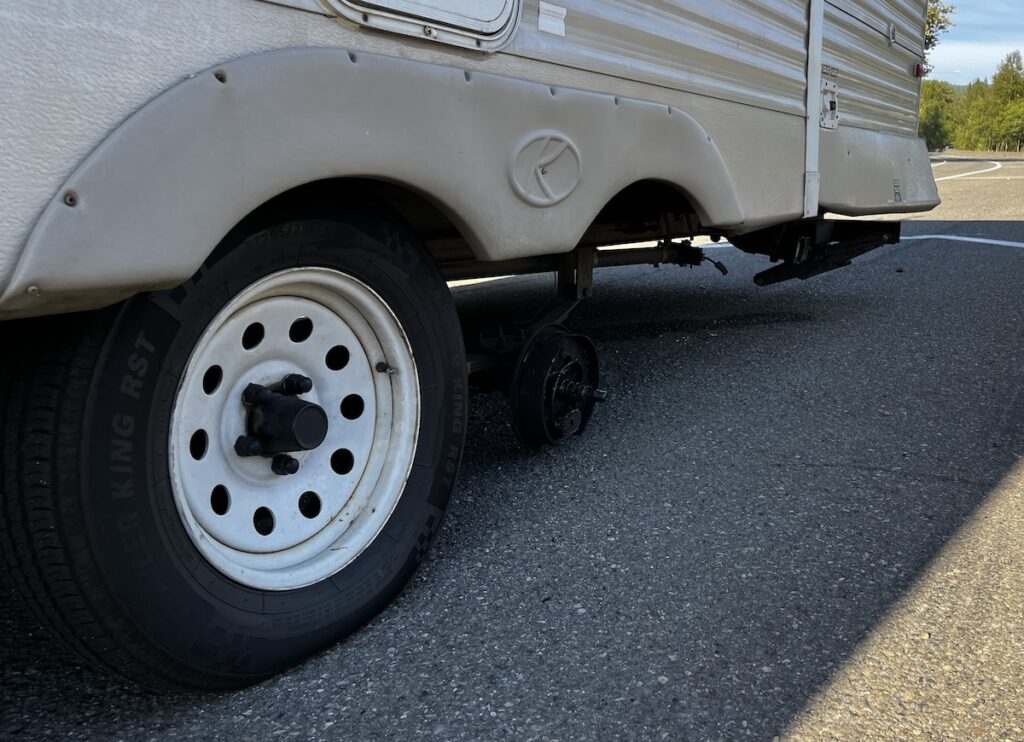
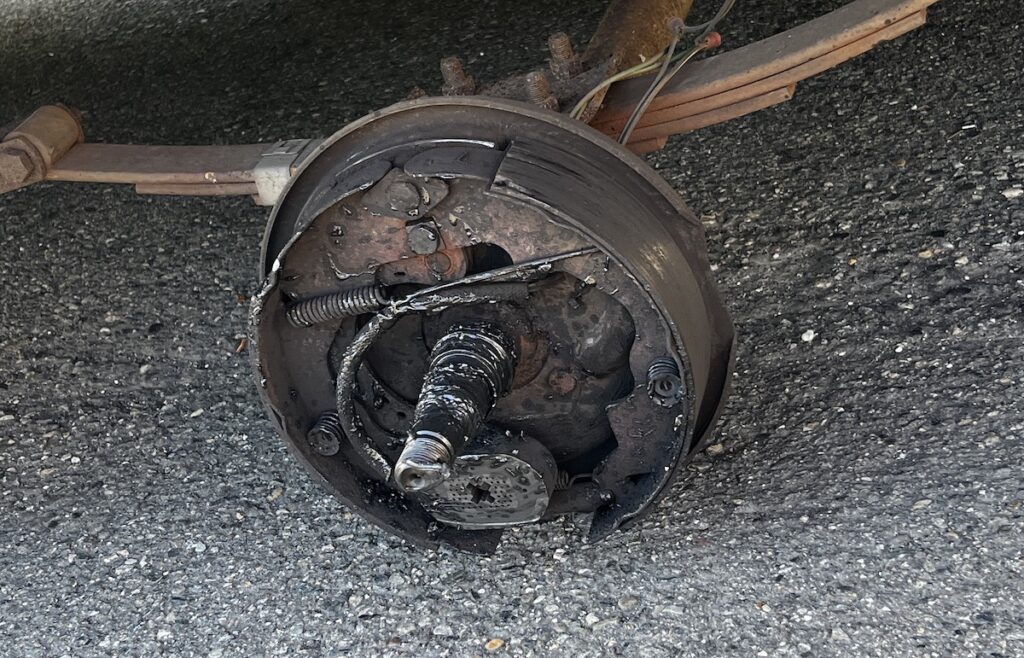
Coming down a mountain pass, I noticed parts of my trailer broken off and flying back in my mirror. Not aware what happened, I stopped at the first safe opportunity in the triangle of an off-ramp. Immediately, the damage was clear. One of the trailer’s four wheels was completely missing—hub and all.
Fortunately, there were no vehicles behind me for a significant distance and a Jersey barrier separated opposing lanes of traffic. Nobody was hurt, either in my vehicle or in any other. In that moment of relief, my now-three-year-old son, who struggled with his speech, put enough words together to ask to ride his bike in the tire shop parking lot while we waited for our trailer to arrive. It was an incredibly sweet moment in a day where my wife and I were a mess from where the trip had led us.
The trailer’s axle stub threads were partially worn, suggesting this had been an issue for some time. I even had a tire shop air up the tires before the trip home and make a visual inspection. Nothing looked off to me or the shop employees.
The Aftermath
After a tow to a shop, we replaced the axle, missing hub and brake assembly, and put on a new wheel and tire. The whole affair cost me about $2,600, split about equally between the tow bill and repairs, which included:
- Axle replacement
- New hub and brake assembly
- New wheel and tire
I fixed the rest of the damage to the sewer line and stabilizer jack, but in the end we sold that trailer for less than we should have—just to close that chapter. Since then, we bought a much newer, better maintained trailer which we’ve enjoyed immensely.
Lesson Learned
Preventative maintenance matters. Yes, it can be time-consuming and sometimes expensive. But lives can literally depend on it. I “saved” a couple hours of time and $5 in supplies by not checking the bearings. It cost me thousands of dollars, weeks of stress, and could have ended far worse.
RV Maintenance (Briefly)
I plan on doing more posts about RV trailers, using them, and maintaining them. But for now, a very brief rundown of the most vital maintenance checks.
- Wheel bearings: Inspect and re-pack at least every 12 months or 12,000 miles, whichever comes first. Remove all old grease and always replace the grease seal and split pin, at a minimum.
- Tires: Always maintain at the manufacturers recommended pressure. I’m currently running these Free Country 205/75/14 tires on my trailer and they’ve held up well through 6,000 miles of use.
- Replacing tires: RV trailers (and most trailers in general) have tires built to hold a lot of weight at a high pressure. Your tires will probably get too old before you wear them out. Replace at 5 years or when the tread falls below 2/32nds of an inch.
- Brakes: Trailer brakes are best replaced as complete units, such as these Vevor RV Trailer Brake Assemblies. If your truck doesn’t have one, a trailer brake controller is essential.
Heads up: a few links here may be affiliate links. Using them supports Fix Up Fleet without costing you extra — and lets me buy the next batch of parts for new projects.

I’m a lifelong DIYer keeping a fleet of cars and trucks on the road — from Subarus to a ’69 MGB GT to a dump truck. Fix Up Fleet is about budget-minded fixes, practical advice, and having fun with every rig in the garage. Buy it, fix it, drive it, repeat.