Why I Got a 1990 Honda Acty Kei Truck (And What I Plan to Do With It)
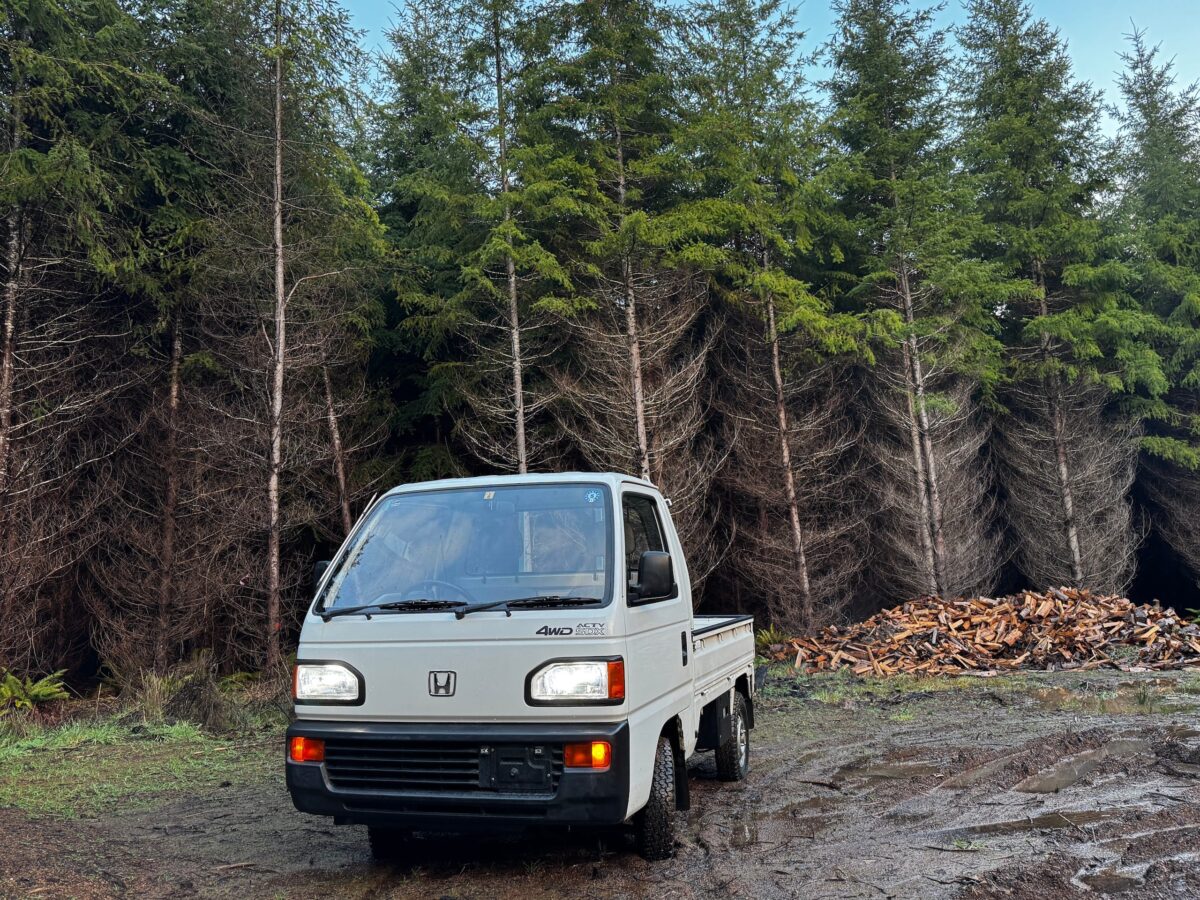
You might be wondering why I invested in a tiny Japanese Honda Acty kei truck, sometimes called mini trucks. The short answer: I needed a small, versatile workhorse that could handle my property without destroying it. The long answer? Let me explain.
Tackling Timber on Our Land
Just over a mile from our house, my wife and I bought a 3.5-acre parcel to build our dream home. The challenge: timber.
Our land is full of dense, 20-year-old Douglas firs planted for timber production. In the Pacific Northwest, forests are typically harvested on 40-year cycles. This meant that just as our property was due for thinning, we became the owners.Community restrictions require us to leave a 25-foot vegetative buffer along property lines, and we wanted privacy. That leaves more than an acre of trees that need thinning, then cut into firewood. The problem is that the root systems are shallow, several trees fall each year, and there’s almost no understory. We needed a way to manage this physically, safely, and without heavy machinery tearing up the land. Plus, being close to our current house, I make frequent trips to the property with tools, materials, and other truck stuff. Enter the Acty.
Why the Honda Acty
I had been considering a kei truck for years and finally settled on the Honda Acty for a few key reasons:
- All-Wheel Drive & Flat Land: My property is mostly flat, so true off-road capability isn’t required. The Acty’s AWD and all-terrain tires handle everything I need.
- Mid-Engine Layout: Easier to work on, stays cooler, and keeps the cab quiet.
- Parts Availability: The Acty remained largely unchanged between 1990–1999, making parts widely available. Many compatible parts even come from other Hondas.
- Honda Reliability: Hondas are durable, cheap to run, and easy to maintain — I’ve owned several and trust them to last.
Plans for the Acty
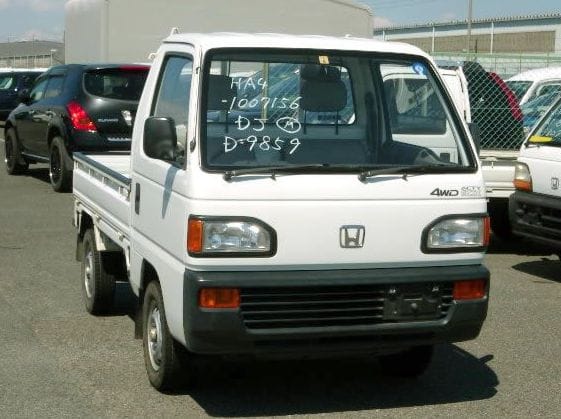
Nearly a year after it arrived from Japan, the Acty has become my go-to for thinning trees, hauling materials, hauling firewood, trips to the gas station, and other outdoor projects. I’ve made the run between my house and property hundreds of times. It’s small enough to navigate tight spaces but sturdy enough to carry heavy loads without tearing up the land.
I also plan to document repairs, maintenance, and modifications on Fix Up Fleet — giving a behind-the-scenes look at what makes these tiny trucks so useful.In fact, this is just the beginning. I’ll probably pick up a few more, fix them, and share the journey here on Fix Up Fleet. If you’re curious about these quirky, reliable mini trucks, stick around — there’s plenty to come.
Heads up: a few links here may be affiliate links. Using them supports Fix Up Fleet without costing you extra — and lets me buy the next batch of parts for new projects.

I’m a lifelong DIYer keeping a fleet of cars and trucks on the road — from Subarus to a ’69 MGB GT to a dump truck. Fix Up Fleet is about budget-minded fixes, practical advice, and having fun with every rig in the garage. Buy it, fix it, drive it, repeat.